How AI Saved My Dog’s Life (After Months of Reading Why I Should Fear It)
If you’ve been online lately, you know the mood around artificial intelligence. It’s not great.
Every week brings a new headline. AI is going to take your job. AI is flooding the internet with fake images and made-up articles. Students are using it to skip the homework. Artists and writers are watching their work get swallowed into systems they never agreed to feed. Chatbots confidently say things that turn out to be flat wrong. And somewhere in the background, people keep asking what all of this is doing to the way we think, work, and trust each other.
I run a web design business in West Michigan, so I hear every version of this from clients. Some are wary. Some are angry. A few are just tired of the whole conversation. I understand all of it, and I share a good chunk of the concern. Much of it is fair, and I’m not here to wave it away.
But I want to tell you about a night a few weeks ago, because it complicated my own view.
Two Weeks of Explaining It Away
My dog hadn’t been himself. He was lethargic and picked at his food. He spent most of the day lying down, which isn’t like him.
We had an easy explanation. We were in the middle of switching his food, and anyone who has done that knows how it goes: upset stomach, low energy, a few off days. We told ourselves he’d bounce back.
He didn’t. One night he got noticeably worse, and I did something I’d never done before. I took a few photos of him and sent them to Grok, the AI assistant from xAI.
I didn’t expect much. It was late, I was worried, and I wanted a second opinion from something that wouldn’t say “wait and see.”
“Right Now. Not Tomorrow.”
Grok asked me a few questions about how he’d been acting. Then it told me something I wasn’t ready to hear: I needed to get my dog to a vet immediately. Not in the morning. Right now.
So we went.
The vet found a tumor on his spleen, and it had ruptured. He needed emergency surgery to remove the tumor and the spleen. I’ll skip the drama of that night, but I’ll say this plainly: if we had waited until morning, as we’d planned, he almost certainly would not have lived to see it.
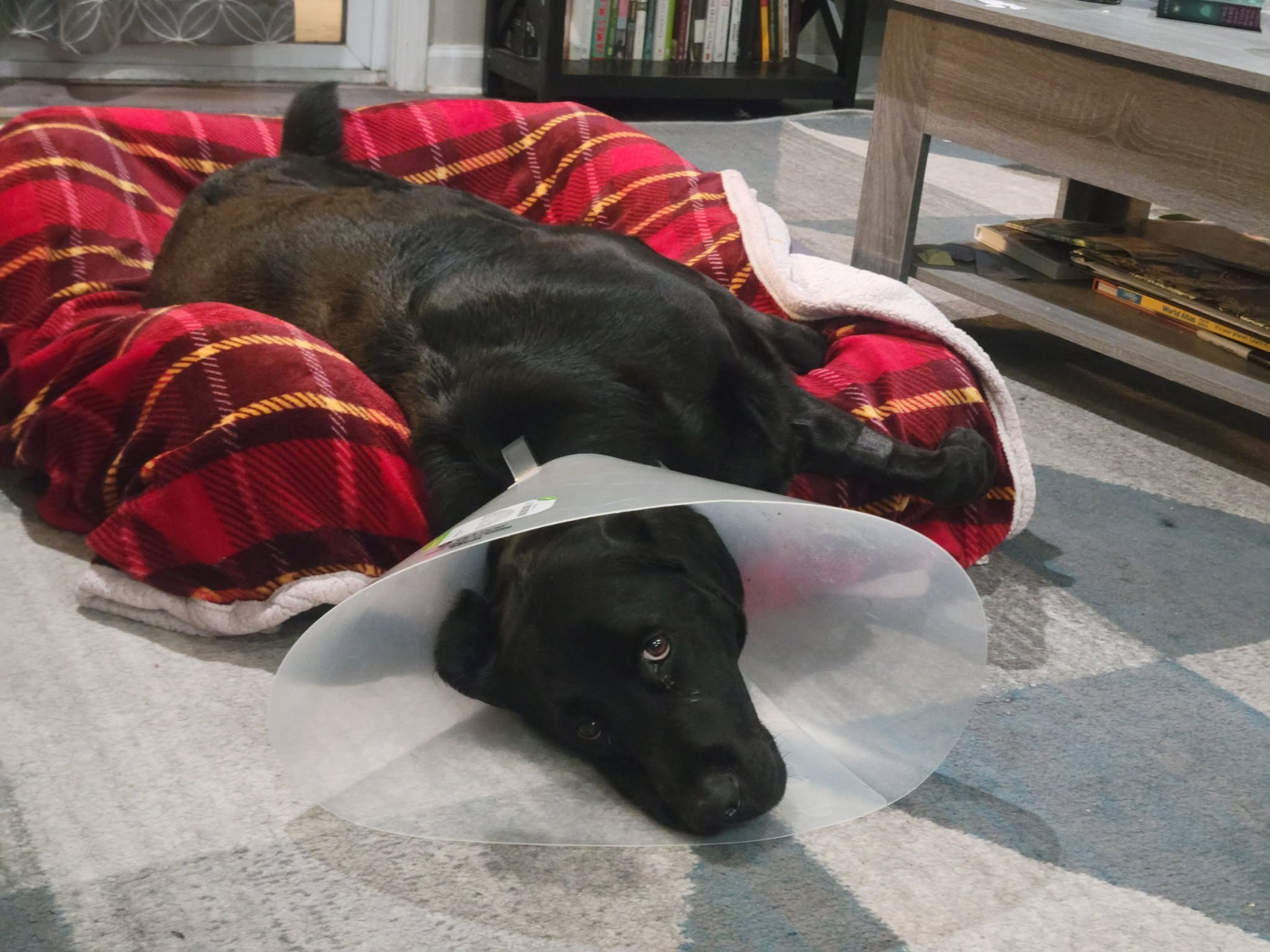
He came through. He’s recovering well, and we’ve been told to expect a full recovery. When I look at him curled up on his bed, looking suspiciously at the giant cone that encircles his head. I still think about how close it was.
Credit Where It Belongs
I want to be careful here, because this story is easy to tell the wrong way.
Grok did not diagnose my dog. It didn’t read an ultrasound, perform surgery, or prescribe anything. The veterinary team did all of that, and they’re the reason he’s alive.
What the AI did was narrower than that. It asked good follow-up questions, took my description seriously, looked at the photos, and gave me a straight answer. Two weeks of rationalizing had left me too close to the situation to see it clearly. A tool with no emotional stake in the story saw the urgency right away, and that pushed me to act in time.
That’s a small job. It was also exactly the right one.
So Where Does That Leave Us?
There are many ideas out there about AI, many of them exaggerated. Most of the concerns are only ideas and theories being thrown around. As is true in most things, if we use AI nefariously, there could be some significant consequences. But AI in itself is not bad. In fact, I use it every day to help me with tasks that would take me hours.
Use it to act sooner, not to wait longer.
Give it real information. I sent photos, symptoms, and a timeline, and I answered its questions honestly. The more specific your input, the more useful the response. That’s true whether you’re describing a sick dog or asking for help drafting a product description or sorting through customer feedback.
Keep the decisions human. The vet made the medical calls. In your business, you or your team should make the ones that matter: pricing, messaging, what goes out under your name. AI should never be a substitute for your own judgement. It is to aid in your thinking, not replace it.
Let it catch what you’re too close to see. I couldn’t see how serious things were because I loved my dog and wanted him to be fine. Business owners do the same thing with their own websites. You stop noticing the broken contact form or the confusing homepage because you’ve looked at them a thousand times. A fresh set of eyes, human or software, can point out what you’ve gone blind to.
Remember where the value comes from. A surgeon’s hands and a team that stayed late are why my dog is alive. In web design, it works the same way. A site might use AI behind the scenes, such as a chatbot, a writing assistant, or smarter search. What makes it work is whether a real person thought carefully about the visitor on the other end. That’s how we approach human-centered web design here around Grand Rapids: use the tools that help, and keep a person responsible for the result.
Back to the Dog
He’s back to being himself now. The energy is returning, the appetite is coming back, and he’s sleeping on the couch like none of it ever happened. I’m happy to let him.
I’m not asking anyone to stop worrying about AI. Keep asking hard questions about it. Hold the companies building it accountable. Stay skeptical of anything that sounds too good to be true.
But when a tool helps someone, it’s fair to say so out loud. A few photos and a few questions were enough to get me to make a call I might have put off until it was too late. If your dog is acting off, don’t wait two weeks like I did. Call the vet. And if a tool helps you take that step sooner, use it.